
The platforms, numbers and tracking already help clubs find players, compare performances and build a shortlist without leaving the office. They make it easier to see what a player has produced and where they might fit on paper.
Technology has made more players visible than any network of flights ever could. But the further you get from well-covered stadiums, the thinner the file becomes — lower leagues, youth games, women’s sides and whole regions can still have fewer cameras and less coverage.
A file can show what a player has produced through clips, numbers and tracking data. But it cannot tell you if they fit this team, this league or this way of playing. It cannot prove someone was at the game or tell you what they are like when the night turns.
A shortlist is useful. It saves time and helps clubs see more players, but seeing a player is not the same as discovering them properly. Technology made more players visible. It did not finish discovery.



Clubs and agents hire scouts who already live in that market, or scouts who know it and will travel. They get a live look and a report they can defend.
If the player sits, comes off, or does not play, they can send eyes again without building a new trip from home. When the decision is big enough, they can take more than one report on the same player.
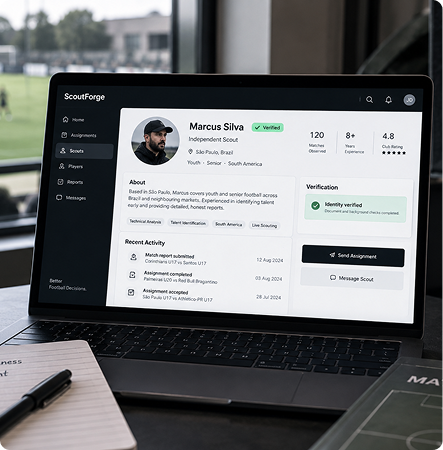
A scout profile does not go live until that scout is verified. No public presence, no hire, no report that clubs or agents can act on until we have a real person behind the name.
Scouts, employed or independent, get paid assignments when extra eyes are needed. A reputation they own. Notebooks they can keep, share, or later monetise.
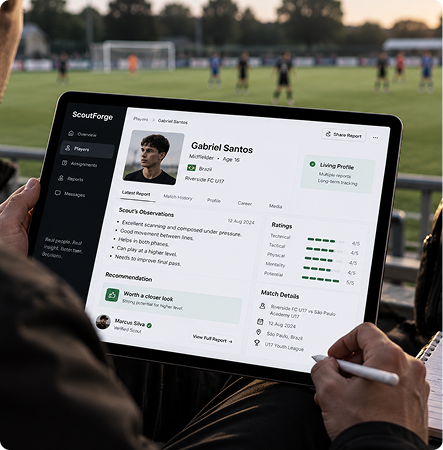
The report is not a similarity score. It is a judgement: do they fit us? We verify the visit, not just the upload.
Players get a living profile that does not vanish after one look — including players aged 10–13 and talent that still sits outside the usual circuit.